
If you love the Bible and want to read it more deeply, Hebrew can feel like a beautiful door waiting to be opened. Many people naturally wonder, “Should I learn Modern Hebrew first so I can get comfortable with the language?” I understand why that sounds practical. Modern Hebrew uses the same alphabet and many familiar roots, and it is a living language spoken every day. But when the goal is serious Bible study, I encourage students to begin with Biblical Hebrew first. The two are related, but they are not the same doorway.
By Janice F Baca
This is not an argument against Modern Hebrew. Modern Hebrew is useful, fascinating, and valuable in its own right. But if your first goal is to understand the Hebrew Bible, then Biblical Hebrew gives you the grammar, vocabulary, sounds, poetry, idioms, and ancient worldview you actually need. Modern Hebrew can help later, but it should not become the lens that controls how you read the biblical text.
Two Hebrews, Two Worlds
Biblical Hebrew is the language of ancient Israelite texts, especially the Hebrew Bible, or Tanakh. It grew inside a world of covenant, worship, sacrifice, kingship, prophecy, poetry, exile, and restoration. Modern Hebrew, on the other hand, is the revived everyday language used in Israel today. It had to develop words and habits for modern life: phones, cars, schools, politics, electricity, texting, news, and everything else ancient writers did not describe. That alone should make us pause before assuming one form of Hebrew can automatically explain the other.
For Bible students, the issue is not pride, speed, or sounding impressive. The issue is faithfulness. We want to hear the text as clearly as possible before we bring modern assumptions to it.
Where Modern Hebrew Starts to Fall Short: Grammar
One of the biggest reasons I encourage Biblical Hebrew first is grammar. Modern Hebrew often feels more direct to English speakers because it commonly uses a subject-verb-object order, like “David ate the apple.” Biblical Hebrew may place the verb first, unfold the subject later, or use a verb form that does more than simply tell time. Some biblical forms describe whether an action is complete, incomplete, repeated, habitual, projected, commanded, or part of the main storyline. If we bring only a modern past-present-future mindset, we can miss the passage’s structure.
Grammatical Shifts That Change the Reading
· Verb-first storytelling: Biblical Hebrew often says something like “And said God…” where Modern Hebrew would usually sound more natural as “God said…” This matters because biblical word order can signal movement in a story, emphasis, or continuation.
· The waw-consecutive (wayyiqtol): A form like vayyomer usually means “and/then he said” in biblical narrative. A modern reader may see the opening vav simply as “and,” but in Biblical Hebrew, it can help carry the story forward as a special narrative verb form.
· Aspect instead of simple tense: Biblical Hebrew verbs often focus on whether an action is complete, incomplete, habitual, or unfolding. Modern Hebrew normally pushes the learner toward past, present, and future. That can make a biblical verb feel more “time-based” than it really is.
· Older pronominal and verbal forms: Biblical Hebrew uses forms, endings, and constructions that are rare or absent in everyday Modern Hebrew. A modern speaker may recognize the root but still miss the grammatical signal.
Why Biblical Verbs Can Change the Whole Story
A major problem with reading the Bible through Modern Hebrew is that the biblical verb system does not work like a simple past-present-future chart. For example, the yiqtol form is often introduced as “future,” but that is far too small. In Biblical Hebrew, yiqtol can describe future action, but it can also express commands, laws, habitual action, repeated action, general truths, possibility, desire, and situations that are still open or incomplete. In legal material, it often sounds like the language of instruction: “you shall do,” “he shall bring,” or “it shall be.” In poetry and wisdom, it may describe what usually happens, not just what will happen later.
· Future: It can point ahead to something that will happen.
· Law or instruction: It can say what someone is required to do, especially in legal passages.
· Habitual or iterative action: It can describe what someone regularly does, like “he keeps doing” or “he would do.”
· General truth: It can express what is normally true, not merely what is coming next.
· Volitional meaning: In certain forms and contexts, it can carry the force of “let him,” “may he,” or “let us.”
The wayyiqtol form is another reason Modern Hebrew is not enough. In biblical narrative, wayyiqtol often carries the main storyline forward. It is the “and then… and then… and then…” form of Hebrew storytelling. It gives the reader the timeline: this happened, then this happened, then this happened. If a reader treats every vav as just a loose modern “and,” they may miss the fact that the grammar itself is organizing the story.
The paired form weqatal is also important. If wayyiqtol is the main narrative and prose form for moving past events forward, weqatal often functions in prose as a future-oriented sequence: “and he will…” or “then he shall….” In other words, Biblical Hebrew has special narrative/prose patterns for sequencing past events and for sequencing future or commanded events. The wayyiqtol helps organize past narration, while weqatal can help organize future sequence, instruction, or projected action.
This does not exist in Modern Hebrew in the same way. Modern Hebrew may use a simple past, present, and future tense system, but it does not have the biblical narrative pattern where wayyiqtol drives prose past narration and weqatal gives a future-oriented prose sequence. A Modern Hebrew reader may know the words and still miss the architecture of the passage because the structure belongs to Biblical Hebrew, not modern speech.
When a qatal form appears in the middle of a wayyiqtol chain, it can do something very important: it may step out of the main timeline and place an event earlier than the action being narrated. In other words, the story may be moving forward with wayyiqtol, but then a qatal form gives background information: something had already happened, someone had already done something, or a condition was already true. This is not just a style issue. It affects interpretation, because the reader must know whether an event is next in the sequence or prior background.
Another grammatical feature that can surprise modern readers is agreement with multiple subjects. In Biblical Hebrew, a verb may appear in the singular even when more than one subject follows it. This often happens because the verb agrees with the first subject mentioned, especially when the verb comes before the subjects. In other words, the grammar may follow the nearest or first-mentioned subject rather than the whole group as a modern reader might expect. So a sentence may look “wrong” to someone trained in Modern Hebrew or English, but it is functioning normally inside Biblical Hebrew syntax.
This matters because a translator should not “fix” the verb too quickly or assume the biblical writer made a mistake. The singular verb may be a clue about word order, emphasis, or how the sentence is being staged. Biblical Hebrew often presents the action first and then unfolds the participants. If the first subject is singular, the verb may be singular even though more subjects appear afterward. That kind of grammar shows again why Modern Hebrew is not enough: the reader needs to know the older patterns of Biblical Hebrew, not just modern expectations of agreement.
Active Participles: More Than “What Is Happening Now”
Modern Hebrew uses the active participle as the normal present tense: הוּא כוֹתֵב means “he is writing” or “he writes.” Because of that, a Modern Hebrew speaker may see a Biblical Hebrew active participle and automatically treat it as the simple present tense. But in Biblical Hebrew, the active participle is broader. It is a verbal adjective: it can describe what someone is doing, what someone regularly does, what kind of person someone is, what is about to happen, or even a title or role.
Put simply, a Biblical Hebrew active participle can work in three big ways: as a noun, as an adjective, or as an active verbal idea. As a noun, it can name a person by what they do: “the keeper,” “the judge,” “the shepherd,” “the one who blesses.” As an adjective, it can describe someone or something: “a guarding man,” “a living God,” “flowing water.” As an active verb-like idea, it can describe action in progress: “he is guarding,” “he is walking,” “he is seeking.” The same basic form can move across these categories depending on context, which is why a simple Modern Hebrew present-tense reading is often not enough.
· Present action: שֹׁמֵר can mean “guarding” or “is guarding.” This overlaps with Modern Hebrew, but it is only one use.
· Habitual action: The same form can mean “one who guards,” “one who keeps,” or “someone who regularly watches over something.” That is more than a momentary present-tense action.
· Characteristic identity: A participle can describe the kind of person someone is: שֹׁמֵר תּוֹרָה can mean “one who keeps Torah,” not merely “someone currently keeping Torah at this second.”
· Occupation or role: שֹׁפֵט can mean “judging,” but it can also mean “judge,” a role or office. רֹעֶה can mean “shepherding,” but also “shepherd.”
· Imminent action: In some contexts, a participle can point to something about to happen, almost like “is going to.” A speaker may describe an event as already underway.
· Ongoing state: A participle can describe a continuing condition, such as “dwelling,” “standing,” “sitting,” “seeking,” or “fearing.” It may describe a state of life, not just a single action.
· Substantive noun: With or without the article, a participle can function like a noun: “the one who blesses,” “the one who curses,” “the one who seeks,” “the one who dwells.”
· Divine or theological title: Biblical Hebrew can use participles to describe God by what He characteristically does: “the one who creates,” “the one who saves,” “the one who keeps,” or “the one who gives.” These are not merely present-tense actions; they express identity and ongoing character.
This is a vast difference. In Modern Hebrew, the active participle mainly answers, “What is happening now?” In Biblical Hebrew, it can also answer, “What kind of person is this?” “What does this person usually do?” “What role does this person hold?” “What action is unfolding?” or “What is about to happen?” If a reader reduces every active participle to the modern present tense, the translation may become too flat. The Bible may be describing identity, habit, office, character, or imminent action, not just a present moment.
Joel 2: When Verb Forms Create Fire and Movement
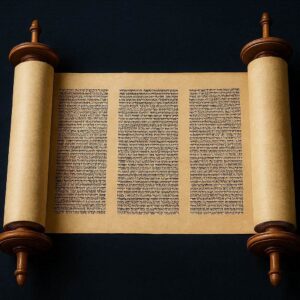
Joel 2 is a good place to see why a modern tense-based reading can fail. In prophetic poetry, the text may place qatal and yiqtol forms close together, sometimes even in the same verse or tightly connected lines. A qatal form may present an action as complete, vivid, or viewed as a whole, while a yiqtol form may present action as incomplete, repeated, ongoing, expected, or characteristic. That means the shift is not random, and it is not simply “past tense plus future tense.” The writer may be changing how the action is being viewed.
For example, Joel 2:3 says that fire devours before the invading force and a flame burns behind it. The verbתְּלַהֵט (telahēt, “burns/blazes”) is a yiqtol form, and that matters. If someone reads it only as a simple future tense, they may hear, “a flame will burn behind them,” as if it were merely one future event. But in the poetic flow of Joel 2:3, the yiqtol may hint at ongoing or continual burning: the flame keeps blazing behind it, repeatedly consuming what it leaves in their path. The point is not just that a fire appears once, but that destruction follows it as a continuing reality.
This is exactly why yiqtol cannot be reduced to “future tense.” In Joel 2:3, the grammar works with the poetry. The army advances, fire devours, and the flame keeps burning behind it. The verb form can help the reader feel the ongoing devastation. A Modern Hebrew speaker might recognize the root, but Modern Hebrew does not train the reader to hear this older poetic use of yiqtol as a possible continual, characteristic, or iterative action.
Joel 2 also contains forms that invite attention to smaller grammatical details, including what is often called the paragogic nun. A paragogic nun is an added final ן on certain imperfect verb forms. Scholars debate its exact force: some see it as an older or poetic form, while others believe it can add emphasis, certainty, contrast, or rhetorical weight to the verb. Either way, it is another reminder that Biblical Hebrew poetry is not merely giving information; it is shaping intensity. Even a small letter at the end of a verb may help the line sound more forceful or elevated.
That is pertinent to the main point of this article. A Modern Hebrew reader may recognize the root of the verb and still miss the older poetic shape of the form. Biblical Hebrew asks the reader to notice not only the root meaning but also the stem, verb form, suffixes, particles, and poetic setting. Joel 2 is powerful because the grammar itself helps carry the force of the prophecy.
This is important because Joel 2 is poetry and prophecy, not a modern newspaper report. The verbs help create movement, intensity, and pattern. If a reader turns every qatal into the simple past tense and every yiqtol into the simple future tense, the passage can lose its force. The reader may miss the way the prophet moves between completed vision, ongoing devastation, repeated action, and expected judgment. Modern Hebrew does not train the reader to identify these older biblical shifts in the same way.
This is exactly where Modern Hebrew can mislead a Bible student. Modern Hebrew tends to train readers to think in modern tense categories and modern sentence flow. Biblical Hebrew asks different questions: Is this verb carrying the storyline forward? Is it giving background? Is it law, habit, possibility, command, or future? A reader who only asks, “Is this past or future?” is often asking the wrong question. That is why Biblical Hebrew grammar has to be learned on its own terms.
Even Rabbinic Hebrew Has Its Own Rules
There is another layer that complicates things: Late Second Temple Hebrew and Rabbinic (Mishnaic) Hebrew. This is the Hebrew of the Mishnah, Tosefta, some Dead Sea Scrolls material, and later rabbinic discussions. It stands between Biblical Hebrew and later Hebrew traditions, but it is not identical to either. A reader who knows only Biblical Hebrew may think some of it looks “wrong.” A reader who knows only Modern Hebrew may think it looks old-fashioned, legalistic, or strangely phrased. In reality, it is another historical stage of Hebrew with its own grammar, idioms, and habits.
· The waw-consecutive (wayyiqtol) disappears: Biblical narrative often uses wayyiqtol to move the story forward. Mishnaic Hebrew no longer uses that system in the same way. To a Biblical Hebrew student, the lack of the normal biblical storytelling chain can feel grammatically flat or broken, but it is simply a different stage of Hebrew.
· The participle becomes more central: Rabbinic Hebrew often leans heavily on participles for ongoing, habitual, or legal action. Instead of sounding like a biblical narrative, it can sound like “one who does X,” “the person doing X,” or “he is doing X.” This is why rabbinic legal Hebrew often feels more like case law than story.
· The prefix verb is used differently: Biblical yiqtol can carry law, future, habit, desire, or incomplete action. In Mishnaic Hebrew, the older biblical system is simplified and reorganized, so the forms may not carry the same narrative or aspectual force that they do in the Bible.
· Aramaic influence becomes stronger: Rabbinic Hebrew was surrounded by Aramaic, and many forms, phrases, and sentence habits reflect that contact. A phrase may look like Hebrew words, but the logic of the sentence may feel Aramaic.
· Word order can feel unusual: Rabbinic Hebrew often uses compact legal formulas, topicalized phrases, and case-based patterns. It may begin with a situation, then give a ruling, rather than unfolding like biblical prose.
For example, a rabbinic sentence may sound like: “One who finds an object, these are his obligations,” rather than a smooth modern sentence like, “If someone finds an object, he must do these things.” Or it may say, “The one who says X is liable,” using a participle where an English or Modern Hebrew speaker might expect a simple finite verb. Legal discussions may also stack cases quickly: “If this happens, it is permitted; if that happens, it is forbidden.” This can feel choppy, but the style is designed for classification, debate, and legal precision.
This matters because Hebrew is not one frozen thing. Biblical Hebrew, Late Biblical Hebrew, Mishnaic Hebrew, Medieval Hebrew, and Modern Hebrew are related, but each stage has its own grammar. If a student reads everything through Modern Hebrew, they may miss the biblical system and the grammatical shifts in time. If they read rabbinic Hebrew as if it were classical biblical narrative, they may think normal rabbinic grammar is incorrect. The better approach is to ask, “Which stage of Hebrew am I reading, and what rules belong to that stage?”
Sometimes the problem becomes clearest when we look at actual verses. These examples show how a Modern Hebrew ear can turn serious biblical language into something unintentionally funny or misleading. That is not because Modern Hebrew speakers are careless. It is because the meanings have shifted.

When Modern Hebrew Makes the Bible Sound Almost Comical
· Genesis 4:14, Cain’s exile: After Cain kills Abel, he says, הֵן גֵּרַשְׁתָּ אֹתִי הַיּוֹם מֵעַל פְּנֵי הָאֲדָמָה. Read through a modern ear, the verb can sound like Cain is saying, “You dismissed me” or even “you fired me.” In the biblical setting, however, Cain is saying, “Behold, You have driven me out today from the face of the ground.” The difference is huge. In the Bible, this is a tragic exile after fratricide. Through a modern lens, the emotional weight can be flattened into the language of dismissal rather than covenantal judgment and banishment.
· Isaiah 58:8, the reward for righteousness: Isaiah says, אָז יִבָּקַע כַּשַּׁחַר אוֹרֶךָ וַאֲרֻכָּתְךָ מְהֵרָה תִצְמָח. A modern reader might recognize the root connected with length or extension and miss the healing image. But the biblical meaning is, “Then your light shall break forth like the morning, and your healing shall spring forth speedily.” The word אֲרֻכָּה is not about something being physically long in this context; it is about healing, restoration, and recovery.
· Psalm 147:10, what God values: The psalm says, לֹא בִגְבוּרַת הַסּוּס יֶחְפָּץ לֹא־בְשׁוֹקֵי הָאִישׁ יִרְצֶה. To a modern ear, the associations with horsepower and the market can pull the reader in the wrong direction. But the biblical meaning is, “He takes no pleasure in the strength of the horse, nor does He delight in the legs of a warrior.” The modern associations make the verse sound as if it might be about engines or economics, whereas the biblical image is of military strength: warhorses and strong soldiers.
· 1 Samuel 16:12, David’s appearance: When young David is brought in from the fields, the text says, וְהוּא אַדְמוֹנִי עִם־יְפֵה עֵינַיִם וְטוֹב רֹאִי. Through a modern ear, the phrase טוֹב רֹאִי could sound like something about good vision. But the biblical meaning is, “Now he was ruddy, with beautiful eyes and a handsome appearance.” The phrase is not praising David for healthy eyesight. It describes how he looked. A modern reader might be pulled toward eyesight language when the passage is actually giving a royal physical description.
· Leviticus 19:16, the duty to protect your neighbor: The command says, לֹא־תֵלֵךְ רָכִיל בְּעַמֶּיךָ לֹא תַעֲמֹד עַל־דַּם רֵעֶךָ. The phrase is a strong biblical idiom, not a wooden image about physically standing on blood. The biblical meaning is much heavier: “You shall not go about as a slanderer among your people, and you shall not stand idly by when your neighbor’s life is at risk.” This example shows why idioms must be translated by meaning, not merely by literal word order.
· Job 41:18, Leviathan’s terrifying majesty: In God’s speech to Job, Leviathan is described with the words, עֲטִישֹׁתָיו תָּהֶל אוֹר וְעֵינָיו כְּעַפְעַפֵּי־שָׁחַר. A wooden modern reading might make the imagery sound strange: “Its snortings flash light, and its eyes are like the eyelids of dawn.” But the biblical image is powerful: “Its snortings flash forth light, and its eyes are like the first rays of the morning.” The phrase “eyelids of the dawn” is poetic imagery for the first light breaking over the horizon. The point is not literal anatomy but terrifying poetic radiance.
Examples like these are helpful because they make the problem visible. The modern meanings are not always “wrong” in modern life, but they are wrong for the ancient passage. A translator or Bible student has to slow down and ask what the words, idioms, and images meant in their biblical setting.
Aramaic Examples from Daniel and Ezra
The same problem can happen with Biblical Aramaic. Portions of Daniel and Ezra are written in Aramaic, the language of the empire, administration, diplomacy, and law in much of the ancient Near East. Some Aramaic words later entered Hebrew or influenced later Hebrew vocabulary. That means a modern reader may recognize a word but still import a modern meaning into an ancient imperial setting.
It helps to distinguish Imperial Aramaic from Biblical Aramaic. Imperial Aramaic is the broader historical form of Aramaic that functioned as a common administrative and diplomatic language across empires, especially in government, law, letters, decrees, archives, and official communication. Biblical Aramaic is the Aramaic preserved in Scripture, especially in Daniel and Ezra. It shares the world of imperial language, but it is the form we meet inside the biblical text. In simple terms, Imperial Aramaic is the larger historical language of the empire; Biblical Aramaic is the scriptural Aramaic found in particular passages.
· Daniel 2:35, the destructive wind: In Nebuchadnezzar’s dream, the broken statue becomes like chaff and the wind carries it away: וּנְשָׂא הִמּוֹן רוּחָא וְכָל־אֲתַר לָא־הִשְׁתְּכַח לְהוֹן. The Aramaic word אֲתַר means “place” or “site.” In Modern Hebrew, atar can mean an internet website. So a modern association could make the line sound oddly digital, as if no “website” was found for them. But in Daniel, the meaning is that no place remained for the shattered kingdoms. They were erased from the scene.
· Ezra 5:17, the royal archive or treasury: The officials ask that a search be made in the king’s royal storehouse or archive in Babylon: יִתְבַּקַּר בְּבֵית גִּנְזַיָּא דִי־מַלְכָּא. The Aramaic גִּנְזַיָּא refers to treasures, archives, or a treasury setting. This is not a casual storage closet; it is the world of imperial records and royal documents. A modern reader needs to hear the administrative setting, because the issue is whether Cyrus’s decree was preserved in the official records.
· Daniel 3:2, the gathering of officials: Nebuchadnezzar summons the satraps, prefects, governors, and rulers of the provinces: לְמִכְנַשׁ לַאֲחַשְׁדַּרְפְּנַיָּא סִגְנַיָּא וּפַחֲוָתָא כָּל־שִׁלְטֹנֵי מְדִינָתָא. The word מְדִינָה in this Aramaic context refers to an imperial province, not to the modern idea of a nation-state. The scene is not a small local meeting; it is a massive imperial assembly of rulers and officials from the provinces of Babylon’s empire.
These Aramaic examples are pertinent because they show that the issue is larger than Hebrew alone. Bible students must ask which language they are reading, which historical period shaped the word, and whether the modern meaning belongs in the ancient passage. Daniel and Ezra are filled with imperial vocabulary, so translation must pay attention to government, archives, provinces, and royal authority, not modern websites, casual offices, or current political categories.
Familiar Words Can Hide Ancient Meanings
Vocabulary is another trap. Modern Hebrew borrowed from Biblical Hebrew, but many old words were reused with new meanings. A word that once belonged to a religious, agricultural, or ancient political setting might now describe a modern object or idea. Modern Hebrew also has many words for things that did not exist in the biblical world. So a modern speaker may recognize a root or a word but still miss the ancient meaning, tone, or context.
A good example is the root זמר (z-m-r). In Biblical Hebrew, this root often appears in the Piel stem in contexts of singing praise or making music to God. That matters because the Piel stem can carry a sense of intentional, intensified, or focused action. In my book, Power of God Singing: In the Hebrew New Testament, I explain that lexicons such as Gesenius, BDB, and HALOT have linked זמר to several possible meanings: singing with music, strength or might, and plucking, pruning, or cutting down. I also connect the archaic form זִמְרָת (zimrat) in Exodus 15:2 with the Song of the Sea, a victory song where Yehovah is proclaimed as a man of war in Exodus 15:3.
That is one reason I believe this word is so important to understand. זמר appears repeatedly in the Cochin Cambridge Hebrew New Testament, and seeing it in many places can help readers notice how the Hebrew language connects singing, praise, strength, and the power of God. This is not merely a vocabulary issue; it is a reminder that biblical and Hebrew New Testament language can carry layers of worship, victory, and divine action that are easy to miss if we read too quickly or only through a modern lens.
If you would like to study this more, you can download copies of our translations for free from our website at ProjectTruthMinistries.org.
When One Hebrew Word Carries Two Very Different Worlds
Here are more examples where a Modern Hebrew meaning can pull the reader away from the biblical sense. These are especially helpful because the words look familiar, but the world behind them has changed.
|
Hebrew |
Transliteration |
Biblical Sense |
Modern Hebrew Sense |
|
חַשְׁמַל |
chašmal |
Ezekiel’s mysterious |
Electricity |
|
מְכוֹנָה |
məchōnā |
A temple |
Machine; |
|
אָחוּז |
’achuz |
Seized, held, |
Percent (%) |
|
מַסָּה |
massā |
Testing or trial, especially in biblical contexts |
Mass in |
|
תַּנִּין |
tannīn |
Sea monster, serpent, |
Crocodile |
|
לֶחֶם |
lechem |
Food, |
Bread |
|
נֶפֶשׁ |
nefesh |
Throat, breath, life, |
Soul or spirit |
|
זֶרַע |
zera‘ |
Seed, |
Seed or |
|
עָקָר |
‘aqar |
Barren, uprooted, or rootless, |
Related modern forms |
|
רוּחַ |
rūaḥ |
Wind, |
Spirit, |
|
לֵב |
lēv |
Heart as the inner |
Heart, usually |
|
יָד |
yād |
Hand, |
Hand |
These shifts are powerful reminders that a familiar Hebrew word is not automatically a familiar biblical idea. חַשְׁמַל is a perfect example: in Ezekiel it belongs to a mysterious vision of divine radiance, but in Modern Hebrew it means electricity. If a student brings the modern meaning backward into Ezekiel, the passage is instantly distorted. That is why Bible students need Biblical Hebrew first: not just to know what a word can mean today, but to recognize what it meant in its ancient setting.
Why These Shifts Matter for Bible Translation
These shifts matter because Bible translation is not just matching one Hebrew word with one English word. A translator has to ask what the word meant in its biblical setting, what the grammar is doing, what genre the passage belongs to, and how the ancient audience would have heard it. If a translator leans too heavily on Modern Hebrew, the translation may become technically familiar but spiritually and historically thin.
· Vocabulary shifts can distort the image: If חַשְׁמַל is read as “electricity” in Ezekiel, the vision becomes modern and mechanical instead of mysterious and radiant.
· Grammar shifts can change the timing: A qatal in a narrative chain may give background information, while a wayyiqtol may move the story forward. If both are flattened into a simple past tense, the sequence of events can become unclear.
· Yiqtol can change the force of a verse: If yiqtol is treated only as future tense, a verse may lose its sense of repeated, habitual, legal, possible, or ongoing action. Joel 2:3 is a good example, where תְּלַהֵט may suggest continual burning rather than a one-time future event.
· Participles can change identity: A participle may mean “he is doing,” but it may also mean “the one who does,” “the keeper,” “the judge,” or “the shepherd.” That can affect whether the translation sounds like a temporary action or a lasting role.
· Idioms can be ruined by literalism: “His nose burned” should communicate anger, not a physical injury. “Cut a covenant” is covenant-making language, not simply cutting something with a knife.
· Poetry can lose its beauty: Biblical poetry uses parallelism, wordplay, compression, and imagery. If the translator only looks for modern conversational meaning, the poetry can become flat and overly literal.
This is why I believe Bible students should learn Biblical Hebrew before relying on Modern Hebrew for translation. A good translation must listen to the ancient language on its own terms. It must decide whether a word is literal, idiomatic, poetic, legal, prophetic, historical, or theological. It must be noted whether a verb carries the story forward, provides background, describes repeated action, or expresses instruction. Modern Hebrew may help a person recognize letters and roots, but Biblical Hebrew teaches the translator how the text actually works.
Biblical Hebrew Speaks in Layers
Modern Hebrew is built for everyday communication. People use it to order food, read the news, argue about sports, or send messages. Biblical Hebrew is often much more compact, poetic, and layered. A short phrase can carry a lot of meaning because it is tied to ancient idioms, parallelism, wordplay, and cultural assumptions. Reading it well is not just about translating words. It is about understanding how ancient writers used language to create meaning.
Idioms: When Literal Hebrew Misses the Point
· “His nose burned” means he became angry. A word-for-word reading sounds strange, but the idiom makes sense in context.
· “Cut a covenant” means to make or establish a covenant. The wording points back to covenant ceremonies, not just signing an agreement.
· “Lift the face” can mean to show favor, accept someone, or treat someone with partiality, depending on the context.
· “Heart was lifted up” means someone became proud. The heart is not merely an emotional center; it can refer to the inner self, mind, will, or attitude.
· “Stiffened the neck” means to become stubborn or rebellious. The image is physical, but the meaning is moral and spiritual.
· “Slept with his fathers” means died and joined one’s ancestors. A literal modern reading would miss the death formula.
Why Fluent Modern Hebrew Speakers Can Still Miss Biblical Poetry
A Modern Hebrew speaker may be very fluent in everyday Israeli Hebrew and still struggle with biblical poetry. Biblical poetry does not always explain itself in full sentences. It often uses parallel lines, missing verbs, compressed grammar, unusual word order, soundplay, and images that belong to the ancient world. In prose, the reader may expect a clear sentence with a subject, verb, and object. In poetry, the second line may leave out a verb because the first line already supplied it, or it may repeat the idea with different words to deepen the meaning. If the reader expects modern conversational Hebrew, the poetry can feel broken or incomplete when it is actually doing something artistic.
Ancient Hebrew also uses grammatical patterns that a modern speaker may not naturally identify. A form that looks familiar may be functioning in an older way. A verb may not be “past” or “future” in the simple modern sense. A word order may be used for emphasis, focus, or narrative movement. A short phrase may be an idiom rather than a literal statement. This means a modern speaker can pronounce many words correctly and still miss what the grammar is doing. The problem is not intelligence or fluency; it is that Biblical Hebrew belongs to an older grammatical system.
This is why identifying grammatical shifts is so important. A modern reader may see a familiar root and assume its modern meaning or grammar. But the Bible may be using an older stem, an older verb pattern, a poetic construction, or a legal formula. The reader must ask questions like: Is this line poetry or prose? Is this verb carrying the story forward or giving background? Is this phrase literal or idiomatic? Is this word being used in an early, late, foreign-influenced, or poetic way? Modern Hebrew alone does not train the student to ask all of those questions. Biblical Hebrew does.
Same Letters, Different Sounds and Signals
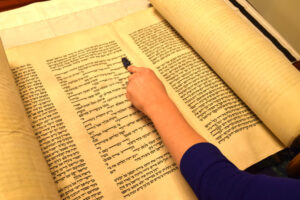
Both forms of Hebrew use the same alphabet, but that does not mean they are read the same way. Biblical Hebrew is often studied with vowel markings, called niqqud, because the consonants alone can be ambiguous. Modern Hebrew usually leaves those marks out, and fluent speakers rely on context. Pronunciation has also shifted over time, so reading a biblical word with a modern accent may help you sound it out, but it does not guarantee that you understand the older grammar or meaning.
Mater Lectionis: When Letters Help Carry the Vowels
Another issue is that some Modern Hebrew instruction does not devote much time to explaining matres lectionis, or “mothers of reading.” These are consonant letters that can help mark vowel sounds in Hebrew spelling. The most common are yod, vav, hey, and sometimes aleph. In Biblical Hebrew, a word may appear with or without these vowel letters, especially when comparing fuller and shorter spellings. If a student has only learned Modern Hebrew spelling habits, these older spelling patterns can become confusing.
For example, the root שלם is related to ideas such as completeness, wholeness, peace, repayment, and restoration. The familiar word שלום includes a vav as a vowel letter. A Bible student needs to understand that the presence or absence of a mater lectionis does not automatically mean a completely different root. Sometimes the spelling is fuller; sometimes it is shorter; and the context, vowels, and grammar must guide the reading.
This matters for Bible study because Biblical Hebrew manuscripts and printed editions can preserve spellings that do not match what a modern student expects. A reader must learn how consonants, vowel points, and vowel letters work together. Otherwise, they may miss relationships between words, overstate differences between spellings, or fail to recognize the same root appearing in fuller and shorter forms. Once again, Modern Hebrew can aid recognition, but Biblical Hebrew teaches students how the ancient spelling system actually works.
Think Shakespeare, Then Go Even Deeper
A good comparison is the difference between modern English and the English of Shakespeare, or even earlier forms of English. You might recognize plenty of words, but the grammar, idioms, spelling, and style can still trip you up. Biblical Hebrew is not exactly the same situation, but the comparison helps: recognizing the language family is not the same as being able to read an old text responsibly.
Modern Hebrew Carries a Modern History
Modern Hebrew is not simply Biblical Hebrew brought back unchanged. When Hebrew was revived as a daily spoken language in the late nineteenth and early twentieth centuries, many of its first modern speakers came from multilingual Jewish communities, especially in Europe. They brought habits from languages such as Yiddish, Russian, German, Polish, and later English. As a result, Modern Hebrew developed new vocabulary, slang, sentence patterns, and even some patterns of expression that reflect European language contact.
Biblical Hebrew was not shaped by those European languages. Its world was the ancient Near East, not modern Europe. Its language contact came through Canaanite, Aramaic, Akkadian, Egyptian, Persian, and other ancient settings. That difference matters. A Modern Hebrew speaker may bring modern Israeli idioms, European-style expressions, or modern meanings of words into a biblical text shaped by a completely different cultural and linguistic environment.
This does not make Modern Hebrew “bad.” It just means it is a modern language with a modern history. It is excellent for modern life in Israel, but it is not a direct shortcut into the grammar, poetry, idioms, and ancient worldview of the Hebrew Bible. For Bible study, the student needs the older language first, because the biblical text was not written in a European-influenced modern Hebrew system.
Loanwords: Tiny Clues to Big Historical Worlds
Another reason Modern Hebrew is not the best road into the Hebrew Bible is that Biblical Hebrew did not exist in a vacuum. The Bible was written and transmitted across a long period of history, and Hebrew came into contact with Egyptian, Akkadian, Aramaic, Persian, and other languages. Some biblical words are loanwords, which means Hebrew borrowed them from another language because Israel was dealing with another culture, empire, object, office, or idea. If a Bible student does not notice this, they may treat every Hebrew word as if it developed solely within Hebrew, which can lead to weak interpretation.
· Egyptian influence: “Pharaoh” appears in Hebrew as פַּרְעֹה (Par‘oh). This comes from the Egyptian royal world, so the reader should hear it as a specific Egyptian throne title, not just a generic word for “king.” Recognizing the Hebrew form helps the student see when the text is placing the story inside Egypt’s political world.
· Akkadian and Mesopotamian influence: A word like הֵיכָל (heikhal, palace/temple) is often connected with Akkadian palace language. Seeing the Hebrew spelling helps the reader recognize that this is not just a simple “house,” but a major royal or sacred building. Words like this can carry the flavor of empire, court life, and official institutions.
· Aramaic influence: The word אִגֶּרֶת (iggeret, letter/document) reflects the world of written communication and administration, especially in later biblical settings where Aramaic was widely used. Recognizing this kind of vocabulary helps the student notice when the text sounds more official, bureaucratic, or post-exilic.
· Persian influence: Persian-period words include פַּרְדֵּס (pardes, park/garden) and דָּת (dat, law/decree). These words can point to life under the Persian Empire, especially in settings involving royal gardens, imperial law, decrees, officials, and administration. Seeing the Hebrew spelling gives readers something concrete to watch for in the text.
This also matters for the time frame of a biblical book, passage, or manuscript tradition. Language changes over time. Earlier Biblical Hebrew does not always sound like later Biblical Hebrew, and later texts may contain more Aramaic or Persian influence because the historical world had changed. Loanwords can act like linguistic fingerprints. They do not automatically settle every dating question, but they can help the student ask better questions: “What period does this vocabulary fit?” What empire or culture stands behind this word? Is this word native Hebrew, a shared Semitic word, or a borrowed term from another language?
Knowing the language a word came from can also protect the reader from shallow word studies. The origin of a word does not control every later meaning, but it often explains why the word entered Hebrew in the first place. A borrowed word may point to a foreign technology, a government office, a legal procedure, a luxury item, a military practice, or a religious object. That background can make the text more concrete. Instead of treating Biblical Hebrew as if it were simply Modern Hebrew with old spelling, the student learns to read it as a historical language shaped by real contact with Egypt, Mesopotamia, Aram, Persia, and the wider ancient world.
My Encouragement: Start with Biblical Hebrew
For a Bible student, learning Biblical Hebrew first is not about rejecting Modern Hebrew. It is about beginning with the language of the text. Biblical Hebrew trains you to notice ancient meanings in their own setting, not just modern meanings that happen to use the same letters. It teaches the sounds and vowel patterns that matter for reading pointed Hebrew texts. It also builds the right grammar instincts from the beginning: verb forms, word order, construct chains, pronominal suffixes, poetry, narrative sequence, and idioms.
If a student starts with Modern Hebrew, they may accidentally train themselves to expect modern meanings, modern sentence flow, and modern pronunciation habits. That is useful for speaking with people today, but it can create bad habits for exegesis. Learning Biblical Hebrew first teaches the student to slow down, ask what the word meant in its ancient context, and let the biblical text set the rules. Modern Hebrew can still be helpful later, but it should not be treated as the main key to the Bible.
This matters especially for serious Bible study because grammar is part of meaning. The difference between the mainline narrative and the background information can change how a passage is understood. The difference between a law, a repeated action, and a future prediction can change how a verse is preached or taught. The difference between a literal modern meaning and an ancient idiom can change the whole feel of a passage. For that reason, Modern Hebrew should not be the starting point for exegesis. It is a living modern language, but Biblical Hebrew is the language of the text being studied.
A practical path is simple: start with the Biblical Hebrew alphabet and sounds, then learn nouns, verbs, stems, construct chains, pronominal suffixes, poetry, and common idioms. After that, the foundation is strong, and Modern Hebrew can be studied as a living modern language without replacing the older biblical grammar in your mind. That way, Modern Hebrew becomes a helpful companion instead of a misleading foundation.
If you feel slow at first, do not be discouraged. Slow reading is part of learning to listen. The biblical text is not a race; it is a treasure to be handled carefully.
Slow Reading Can Be Faithful Reading
It is completely okay for an advanced Biblical Hebrew scholar to be a slower reader of Hebrew. In fact, slow reading can be a sign of respect for the text. A careful scholar is not just trying to produce a quick English sentence. They are weighing grammar, syntax, genre, wordplay, textual variants, ancient context, and possible translation choices. Quick translation can sometimes hide shallow reading.
Modern Hebrew fluency may make someone fast at reading signs, news, or conversations, but Biblical Hebrew scholarship has a different purpose. The scholar’s job is to ask, “What does this form mean here?” not just “What English word can I attach to it?” A slower reader may actually be doing deeper work because they are listening for the grammar, the sounds, the ancient idioms, and the theological weight of the passage before rushing into translation.
Final Encouragement: Let the Bible’s Hebrew Speak First
So, can Modern Hebrew help someone learn Biblical Hebrew? Yes, it can. It gives you the alphabet, many roots, and a living connection to Hebrew today. But if your calling is to study Scripture carefully, Biblical Hebrew should come first. The Bible has its own grammar, vocabulary, poetry, idioms, sounds, historical layers, and ancient world behind it. Learn the older language on its own terms. Let the biblical text teach you how it speaks. Then, if you learn Modern Hebrew later, you can enjoy it without letting it blur the voice of the Scriptures—or accidentally turn Ezekiel’s heavenly radiance into an electric bill.
My encouragement is this: do not be intimidated by Biblical Hebrew. Start slowly, learn faithfully, and allow the ancient language to open the text with greater depth, reverence, and joy. And if your first few translations feel slow, that is okay—Moses spent forty years in the wilderness, so you are allowed to take your time with a verb form.