
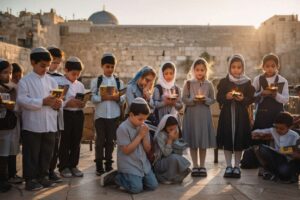
Have you ever wondered who the 144,000 really are—and what their story means for us today? In my book, Discover the 144,000: And Their Song,1 I challenge the traditional assumptions and invite you to see this mysterious group from a fresh perspective. The debate over their identity in the book of Revelation has sparked curiosity and controversy for centuries. Are they only spiritually elite leaders, or could anyone—men, women, even children—be counted among them? But often, people are surprised by my bold claim that children can serve in this role. Yet, Scripture often surprises us, shattering our expectations about whom God chooses for His most important work. One of the most fascinating examples comes from the life of young Samuel in 1 Samuel 3—a child serving in a role reserved for the highest priests. Let’s explore what this means and why it matters today.
But Shemu’ĕl was attending before יהוה – a youth, wearing a linen shoulder garment. And his mother would make him a little robe, and bring it to him year by year when she came up with her husband to slaughter the yearly slaughtering. 1 Samuel 2:18-19 ISR
Why did Samuel’s mother make him a robe each year? Because Samuel was still growing. He was a youth. Therefore, when we place Samuel’s story alongside the description of the 144,000, a striking possibility emerges: God has a pattern of calling children into holy service, even into roles traditionally reserved for the qualified, the trained, and the mature.
Samuel: A Child in Sacred Service

In 1 Samuel 3, Samuel is described as a boy ministering before Yehovah at Shiloh. He is not the high priest; that role belongs to Eli. Samuel is not from Eli’s immediate priestly line of authority, nor is he portrayed as ritually qualified for leadership. And yet, Scripture depicts Samuel sleeping near the ark of God, hearing God’s voice directly, and delivering a message of judgment to Israel’s highest religious authority.
This moment is radical.
God bypasses the established priesthood—corrupt, compromised, and dull of hearing—and speaks instead to a child. Samuel does not seek this role, nor does he fully understand what is happening at first. Yet his defining trait is not qualification, but availability and obedience. When he finally understands that it is Yehovah calling him, his response is simple and unguarded: “Speak, for your servant is listening.”
In that moment, Samuel functions as a prophetic and priestly servant, even though he does not meet the institutional criteria for such a role. Yehovah’s call overrides human expectations.
God’s Pattern: Calling the Unlikely
Samuel is not an isolated case. Throughout Scripture, God consistently chooses the unlikely:
-
- David, the youngest son, overlooked by his own family
-
- Jeremiah, who protested that he was “only a child”
-
- Josiah, who became king at eight years old
-
- A young servant girl who testified about Elisha
-
- And ultimately, Yeshua Himself, whose early life included teaching elders in the temple while still a boy
This pattern reveals something essential: divine selection is not based on age, status, or formal eligibility. God looks instead for responsiveness, purity of heart, and willingness to hear His voice.
If this is how God works consistently, then it is reasonable to ask whether our assumptions about the 144,000 may be narrower than Scripture requires.
Reconsidering the 144,000
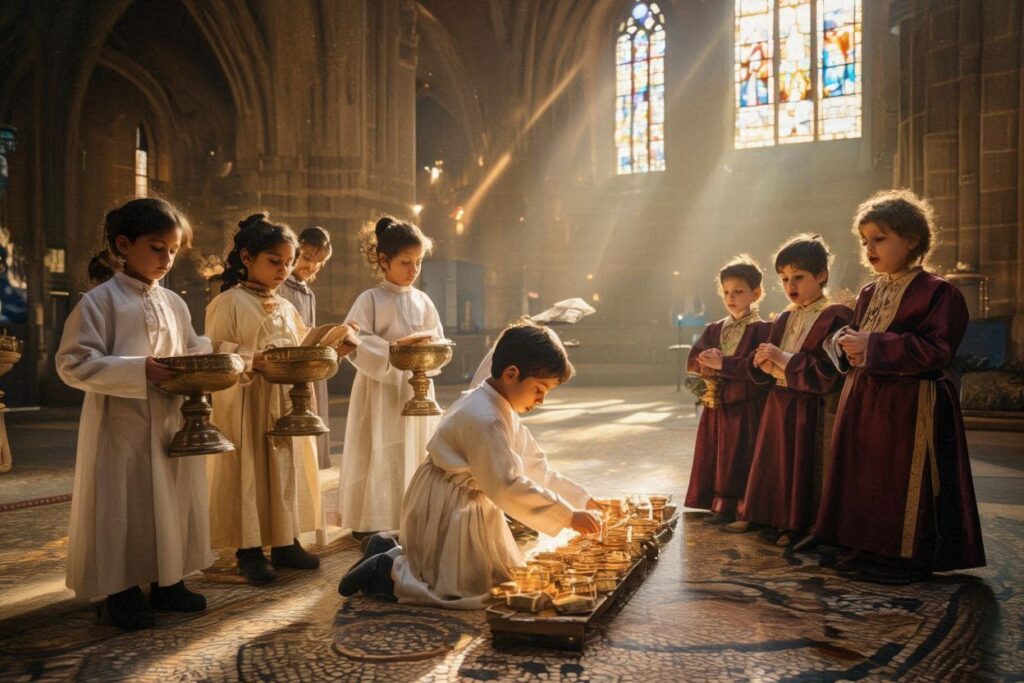
The 144,000 in Revelation are described as servants of God, sealed for a specific purpose. Much emphasis is often placed on their symbolic purity, obedience, and devotion. Yet the text does not explicitly require them to be elders, priests, or even adults.
In fact, their defining characteristics align closely with the qualities we see in Samuel:
-
- They belong fully to God
-
- They follow God’s direction without resistance
-
- They are set apart, not by human appointment, but by divine sealing
Samuel did not inherit his role through priestly succession. He was not elevated by institutional endorsement. He was chosen because he listened when others did not.
Children, by nature, often embody these same traits. They can hear without cynicism, respond without pretense, and trust without the layers of compromise that experience sometimes brings. Scripture never treats these qualities as weaknesses; instead, they are frequently presented as spiritual strengths.
“Not Qualified” Does Not Mean “Not Chosen”
One of the most important theological lessons from Samuel’s story is this: lack of qualification does not disqualify someone whom God has chosen.
Samuel was not “qualified” to serve in the way he did—yet God placed His word in Samuel’s mouth anyway. Eli, the qualified priest, could no longer hear clearly. The child could.
If God was willing to entrust a child with judgment, prophecy, and sacred responsibility in Israel’s most critical religious space, then it is not unreasonable to consider that He could do the same in the apocalyptic vision of Revelation.
The 144,000 may not represent those who meet human standards of readiness, but those whom God has prepared in ways that defy expectation.
A Kingdom that Belongs to the Childlike
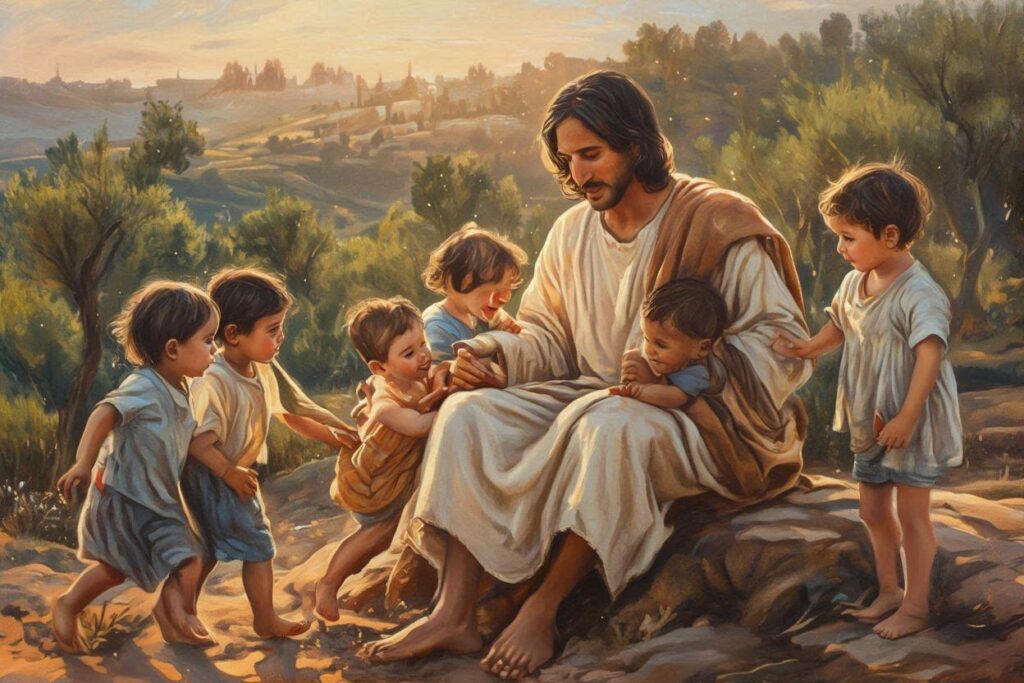
The book of Revelation, translated from Greek to English, also describes the 144,000 as those who belong to the Messiah and as the first fruits offered to God and to the Lamb. Additionally, The Scroll of Mysteries: Cochin Hebrew Revelation2 says they are the “firstborn of Yehovah and the Lamb.” This language is deeply relational rather than institutional. To belong to the Messiah is not first a matter of rank, age, or qualification, but of proximity, trust, and devotion. Significantly, Yeshua consistently welcomed children into that space of belonging. When His disciples attempted to restrict access, He rebuked them and declared that the kingdom of God belongs to such as these, commanding, “Allow the children to come to Me.” Children, then, are not peripheral to the Messiah’s work; they are welcomed participants and exemplars of kingdom posture. If the 144,000 are described as first fruits—those set apart in purity and yielded wholly to the Messiah—it is fitting to consider that children, with their unguarded trust and direct attachment to Him, embody precisely the kind of belonging Revelation highlights.
Furthermore, Samuel’s story gives flesh to that teaching centuries earlier. He was not powerful, credentialed, or experienced. He was attentive.
If the 144,000 are servants who stand with God in a time of great spiritual upheaval, then perhaps what qualifies them is not age or status, but a Samuel‑like posture of listening.
Conclusion:
The story of Samuel invites us to loosen our grip on rigid assumptions about who God can use. It reminds us that holiness is not manufactured through titles, and readiness is not determined by age. God speaks where He wills—and sometimes, He speaks first to children.
Seen through this lens, the possibility that the 144,000 could include—or even primarily consist of—children is not far‑fetched. It is deeply biblical.
God has always entrusted His purposes to those willing to say, with open hearts and unguarded faith:
“Speak, for your servant is listening.”
https://www.youtube.com/@JaniceFBaca_Translator
https://www.facebook.com/JaniceFBaca